
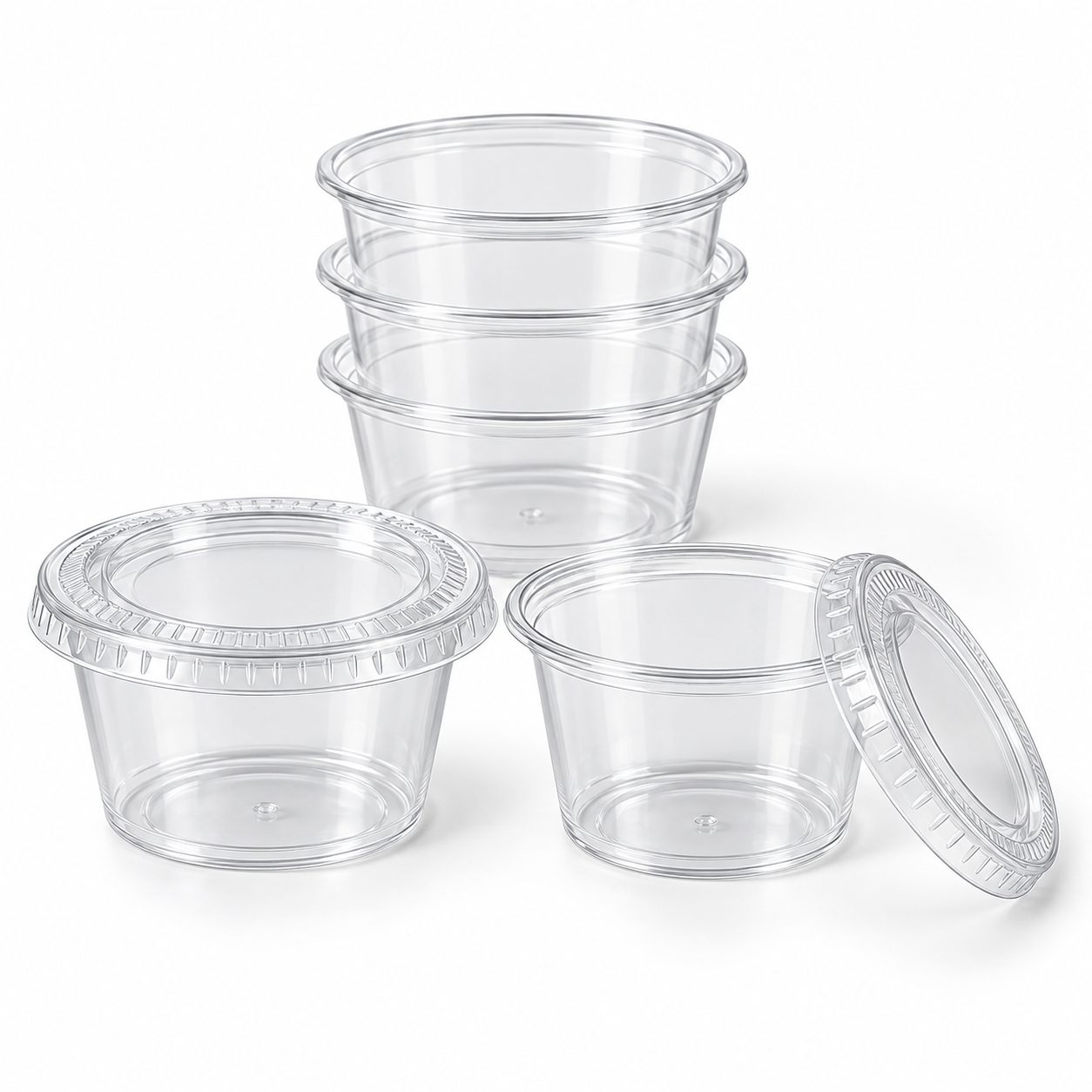
The sauce cup is the smallest item on a delivery order and the easiest to get wrong. Too small and the dip arrives short; too large and every order carries wasted cost. A few service-side habits decide which portion cup actually fits a menu.
Match the cup to the sauce, not the other way round
Thin sauces like soy or vinegar sit comfortably in a shallow cup; thick dressings and chili oil need deeper walls so the cup stays stable beside a meal box. Clear PP is the practical default because the sauce color stays visible at the counter and in the bag.
Hinged or separate lid: a packing-line decision
A separate lid adds one handling step per order and one part that can run out; a hinged cup fills, flips and presses in a single motion. High-volume delivery kitchens usually standardize on hinged cups for exactly this reason, while dine-in services often prefer the lower unit cost of a plain cup with a snap lid.
Two checks that prevent leaking deliveries
- Press the lid on a filled cup and invert it for a minute over a tray; the rim seal should hold without weeping.
- Place the filled cup beside a packed meal box and shake the bag gently the way a rider would; the cup should not tip or slide into the box.
For OEM buyers
Portion size is the one variable buyers should fix before requesting a quote, because it drives the tooling and the packing count. Once the portion is confirmed, a source factory can match cup depth, rim diameter and lid style to the actual sauce range.
Both cup styles discussed here are listed in our sauce cup category.
View sauce cupsShare this note
Continue reading