
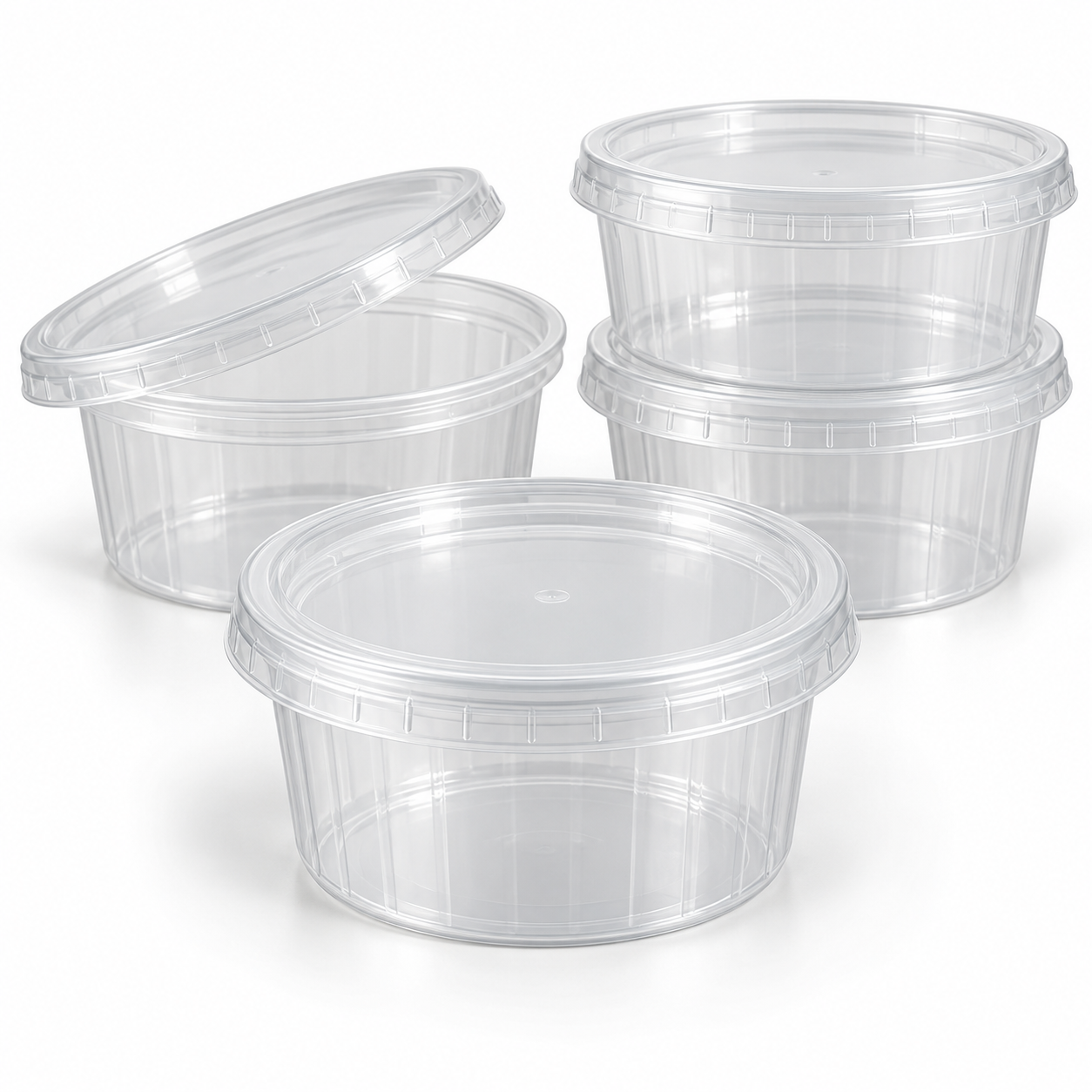
Soup, porridge and stew are the hardest products to deliver: they are heavy, they move inside the bag, and one leak costs the whole order. Deli containers exist for exactly this problem, and the details that make them work are worth checking before any bulk order.
Why the ribbed wall matters
A deli tub with vertical ribs keeps a round shape when it is full. A smooth thin wall flexes under the weight of hot liquid, and a flexing wall is what opens a lid seam in transit. When you compare samples, press a filled tub from the side: a ribbed wall resists, a flat wall gives.
Why the rim profile decides the leak test
The lid grips the ribbed rim, so the seal is only as good as the rim tolerance between the tub and its lid. Buying tubs and lids from the same molding line keeps that tolerance in one pair of hands; mixing brands is the most common cause of soup deliveries arriving half-empty.
Hot fill and the material choice
PP deli tubs are the standard choice for hot soup because the body tolerates reheating and hot fill better than clear PET. If your menu also includes chilled prep batches, the same tub works in cold storage, which is why many central kitchens standardize on one deli line for both.
A short check list before you order
- Fill a sample tub to your real portion level, close the lid, and carry it tilted for ten minutes.
- Reheat a filled tub the way your end customer will.
- Stack filled tubs two high to check the base and rim under load.
If the sample passes all three, the line is fit for wet-food delivery.
The deli line used for this article, including matching lids, is listed in our containers category.
View the deli container for hot soupShare this note
Continue reading